Ketamine-Assisted Psychotherapy (KAP)
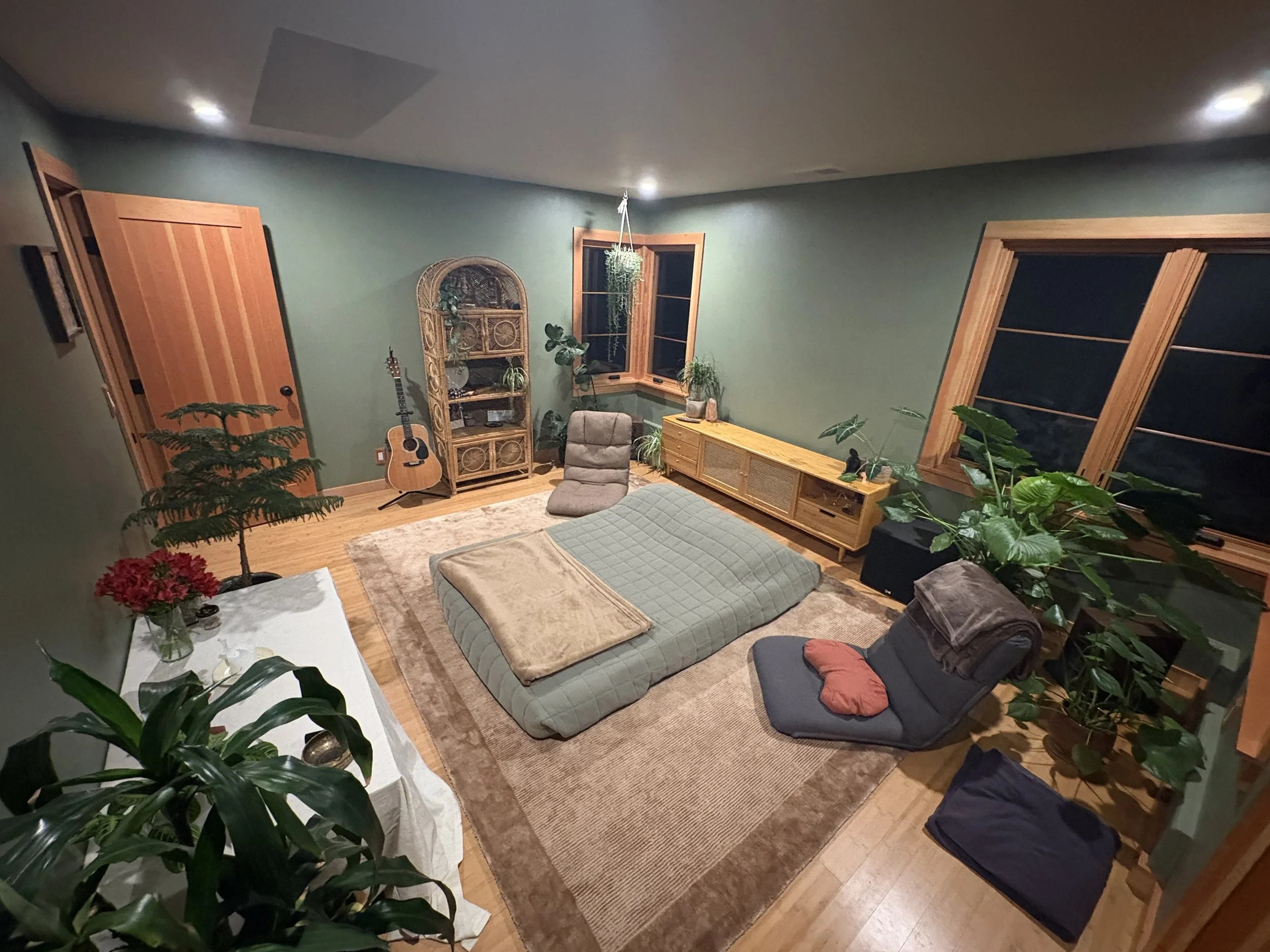
Ketamine-Assisted Psychotherapy (KAP) combines legally prescribed ketamine with guided therapy to help you access insight, emotional release, and renewed perspective.
Each journey includes a medical evaluation, preparation, a medicine session, and integration to help insight become real, lasting change.
KAP uses ketamine—an FDA-approved anesthetic with a long safety record—within a mindful, relational framework.
The medicine can soften rigid defenses and allow access to deeper emotion and self-compassion.
When paired with therapy, these experiences often translate into perspective shifts that help release long-held patterns.

Is KAP right for you?
KAP may be appropriate if you’ve done meaningful therapy but still feel blocked—by depression, anxiety, trauma, grief, or loss of meaning.
It can also support creativity, life transitions, or a sense of renewal.
Certain medical or psychiatric conditions may make KAP inappropriate; your medical consultation ensures safety before proceeding.
Learn more…
-
Ketamine-Assisted Psychotherapy (KAP) is a structured, legal process that combines medical oversight with ongoing therapeutic support before and after the experience. My role is not to induce or direct an experience, but to help you prepare for it, stay oriented within it, and integrate what emerges into your life and relationships.
The process typically includes:
Medical consultation and prescription
Clients meet with a licensed prescribing physician I refer to for a required medical evaluation. If appropriate, the physician provides a ketamine prescription. This step ensures medical suitability and is a necessary part of the legal process.
Preparation sessions
We work together to clarify intentions, assess readiness, and build internal and relational resources. Preparation helps create safety, coherence, and a grounded container for the experience.
The ketamine-assisted session
During the experience itself, my focus is on presence, safety, and gentle support—not interpretation or steering. Sessions are held with care and attunement to your nervous system and pacing.
Integration sessions
Integration supports making sense of the experience over time and translating insights into meaningful, sustainable change. This is often where the deeper work unfolds.
KAP is not about chasing peak states or quick fixes. It is about increasing flexibility, self-contact, and the capacity to relate differently to yourself and your life.
-
Safety—emotional, psychological, and medical—is central to this work.
All clients participate in a medical consultation with a licensed prescribing physician I connect them with, who is responsible for evaluating medical appropriateness and providing the prescription when indicated. I do not prescribe medication.
On the therapeutic side, we move at a pace that respects your nervous system and your life context. We carefully assess readiness and attend to factors such as:
psychological stability and support systems
history of trauma, dissociation, or suicidality
substance use patterns
current life stressors and relational dynamics
KAP is not appropriate for everyone, and part of my role is to help you thoughtfully discern whether this modality is a good fit for you at this time.
-
KAP involves several distinct components, each billed separately and transparently:
Medical consultation and prescription:
$350 for a one-hour evaluation with the prescribing physician (includes assessment and prescription if approved).
Preparation and integration sessions:
$200 per 50-minute psychotherapy session.
The number of preparation and integration sessions is determined collaboratively, based on your needs and goals. Most clients engage in 5–8 sessions total surrounding a given experience.
Ketamine-assisted session:
$600 for the facilitated experience itself.
We will review costs and pacing together in advance so you have a clear understanding of the overall investment before proceeding.